Tony Stone Development
Lazarus components · in real use · public release coming

Houston

Your Lazarus program updates itself, takes bug reports and feedback from its users, and can ask once for a postcard. You read it all in a simple bug tracker. It runs from one small Perl script on your own web host. No accounts, no services to sign up for, no tracking.

Houston
Not public yet, but in real use. Since the end of October 2026 Hecker Sketch runs entirely on Houston: its bug reports, crash reports, postcards and updates all go through a station on this very web host. The source goes public once the rough edges from that first real user are filed off. Tell me what you think.

Three pieces

Most hobby programs never get updates or bug reports because the plumbing is a project of its own. Houston is the plumbing, in three parts.

The components

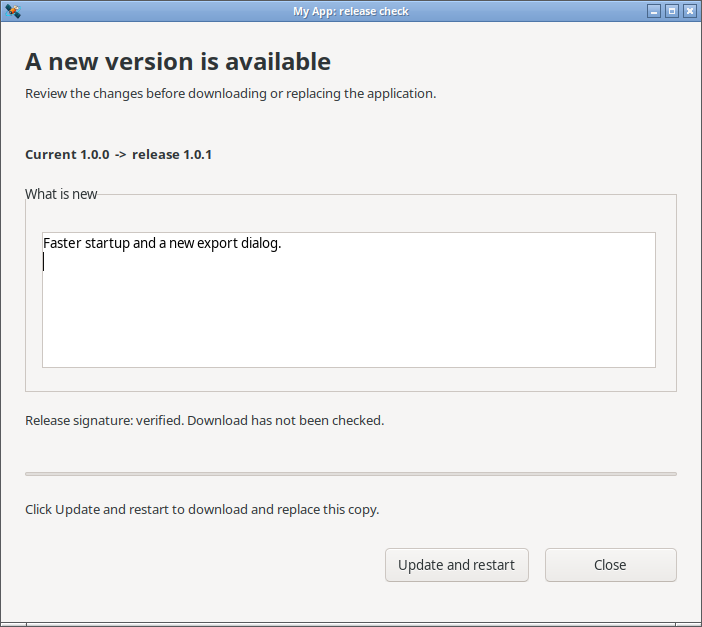
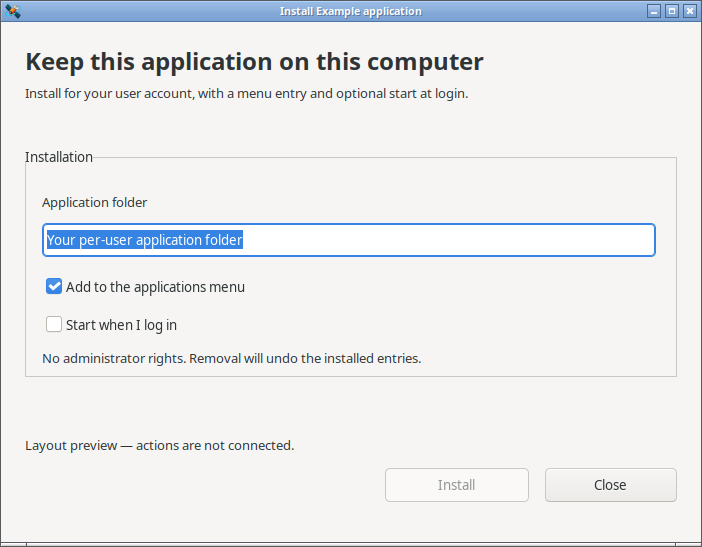
A link plus only the ones you want: updater, installer, bug report, feedback, postcard. They are Lazarus actions, so you set a button's or menu item's Action and that's it. No code. A link and a postcard is enough to start.

Ground Control

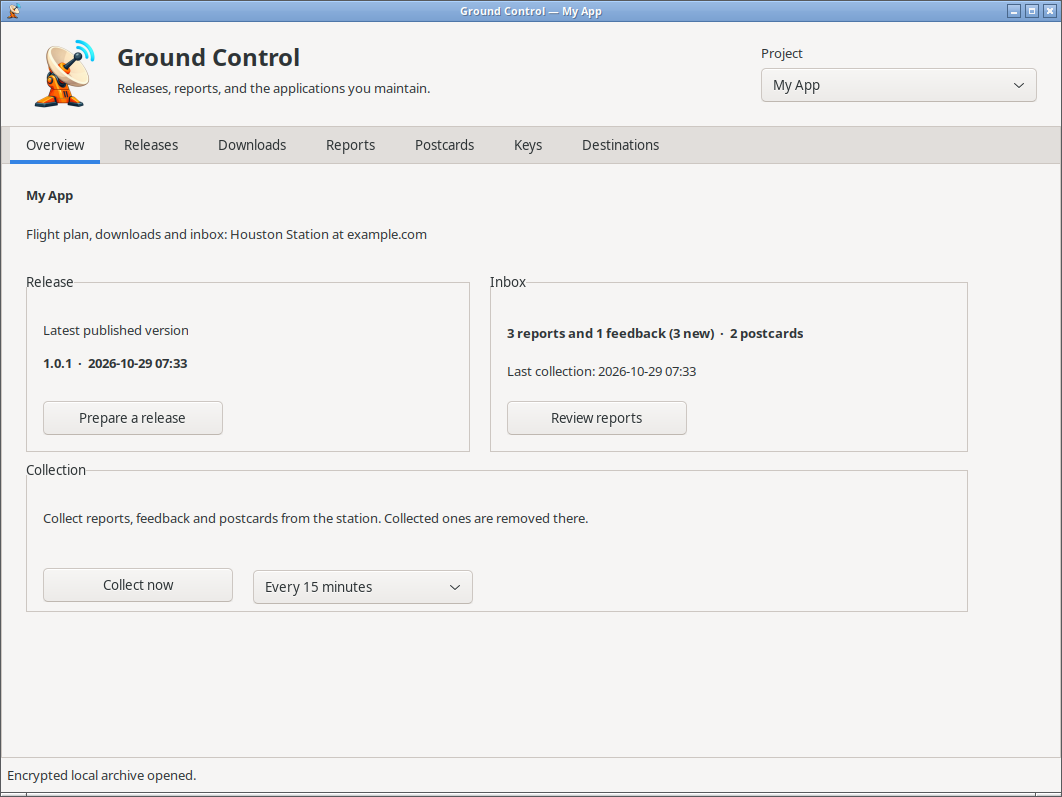
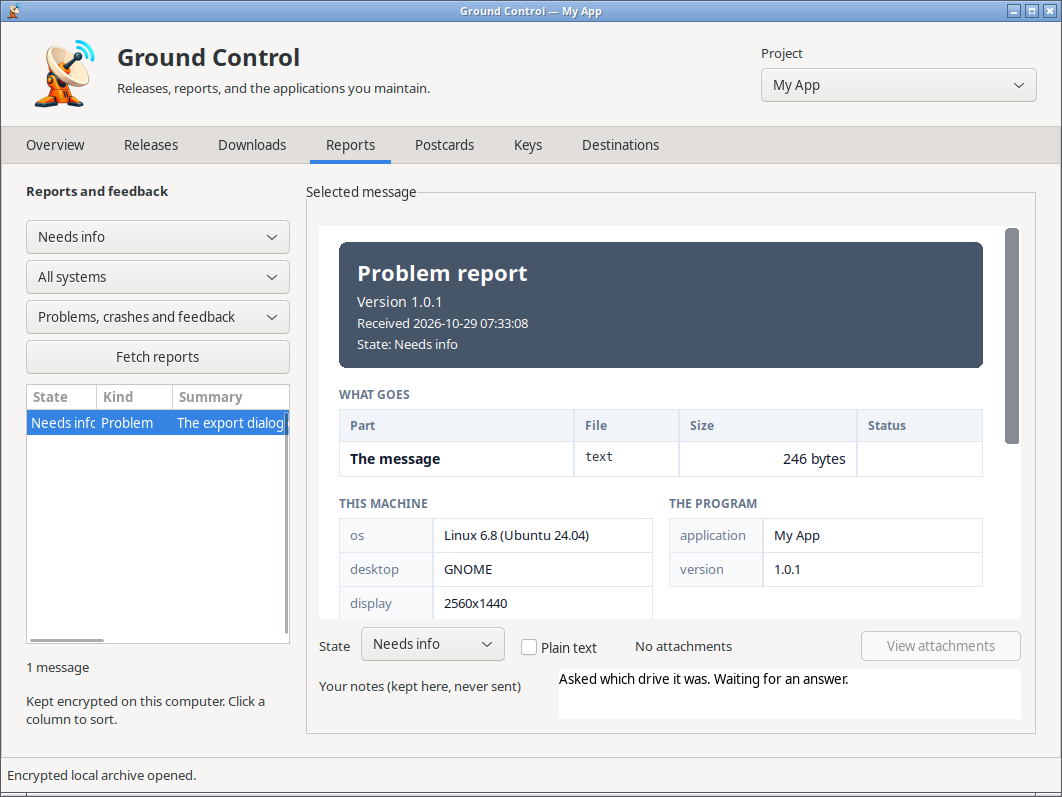
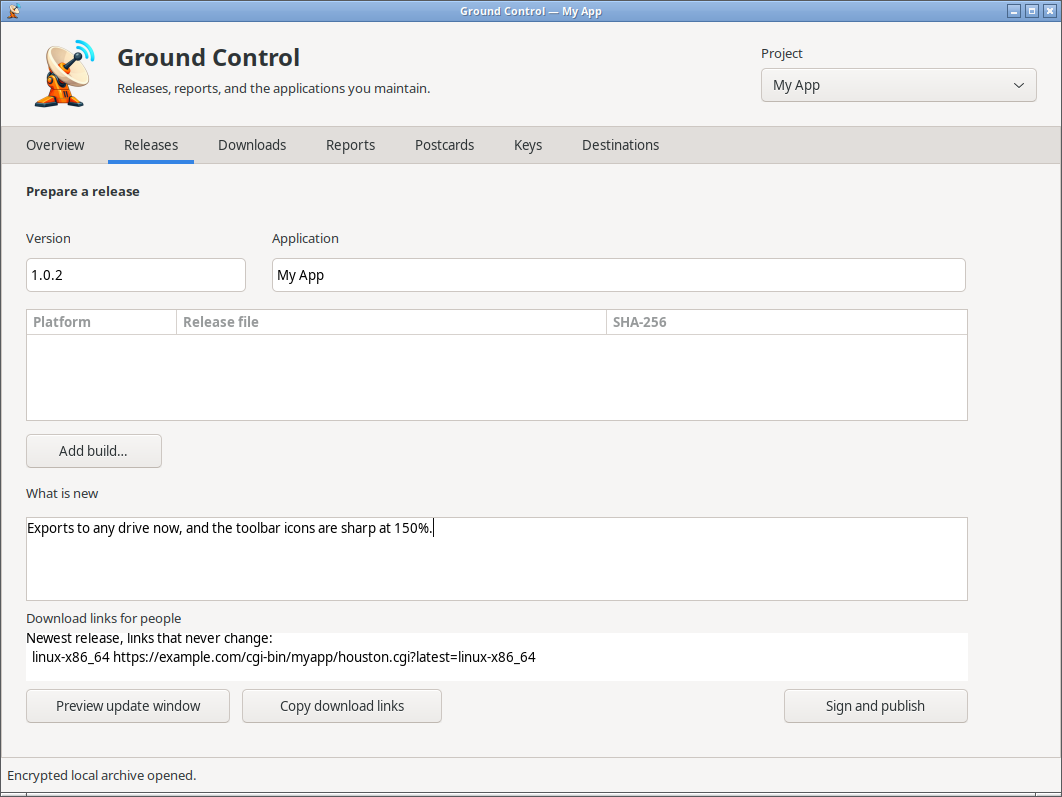
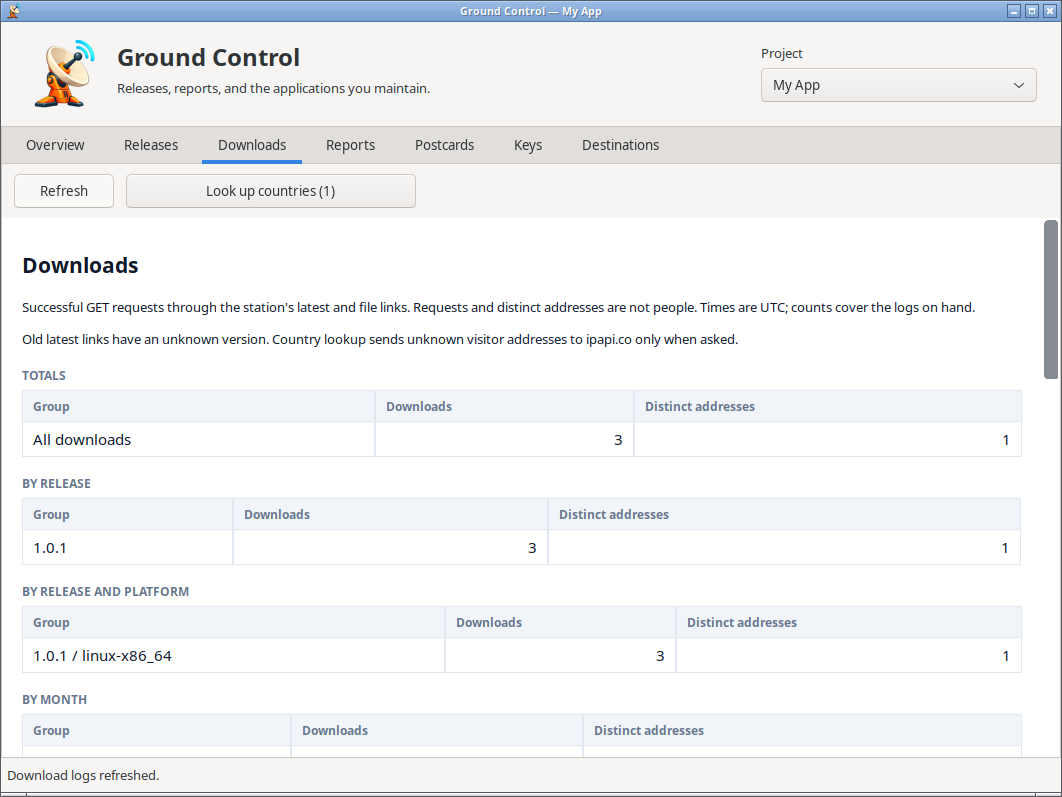
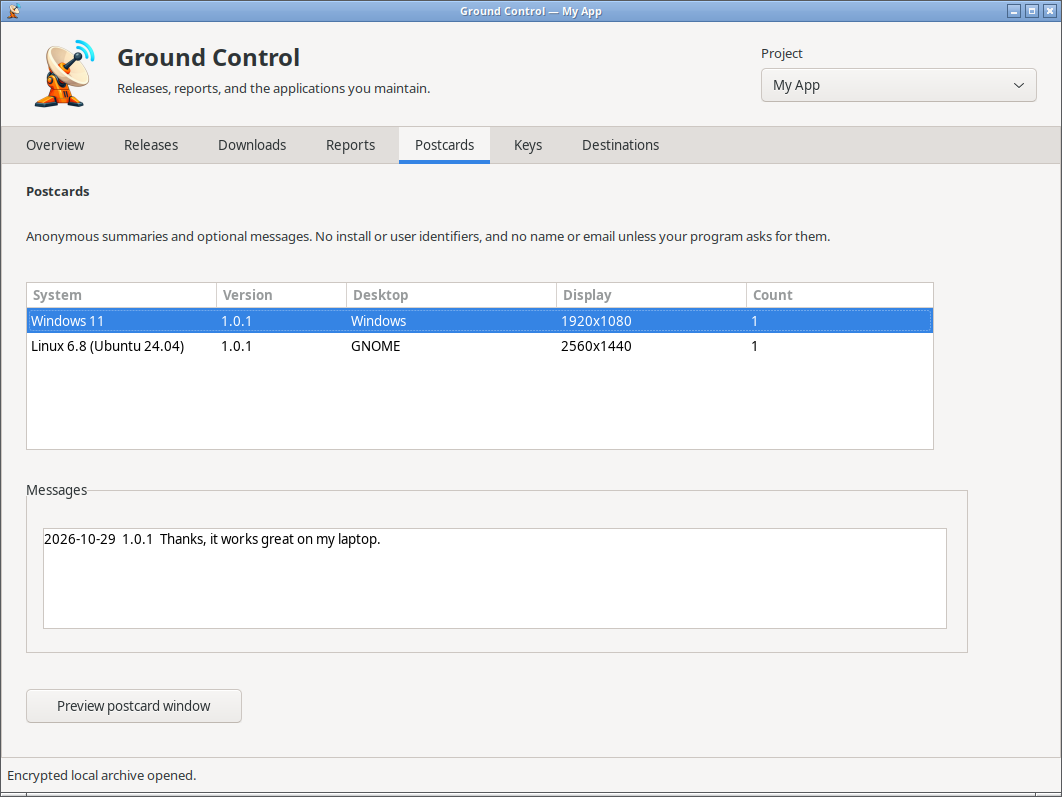
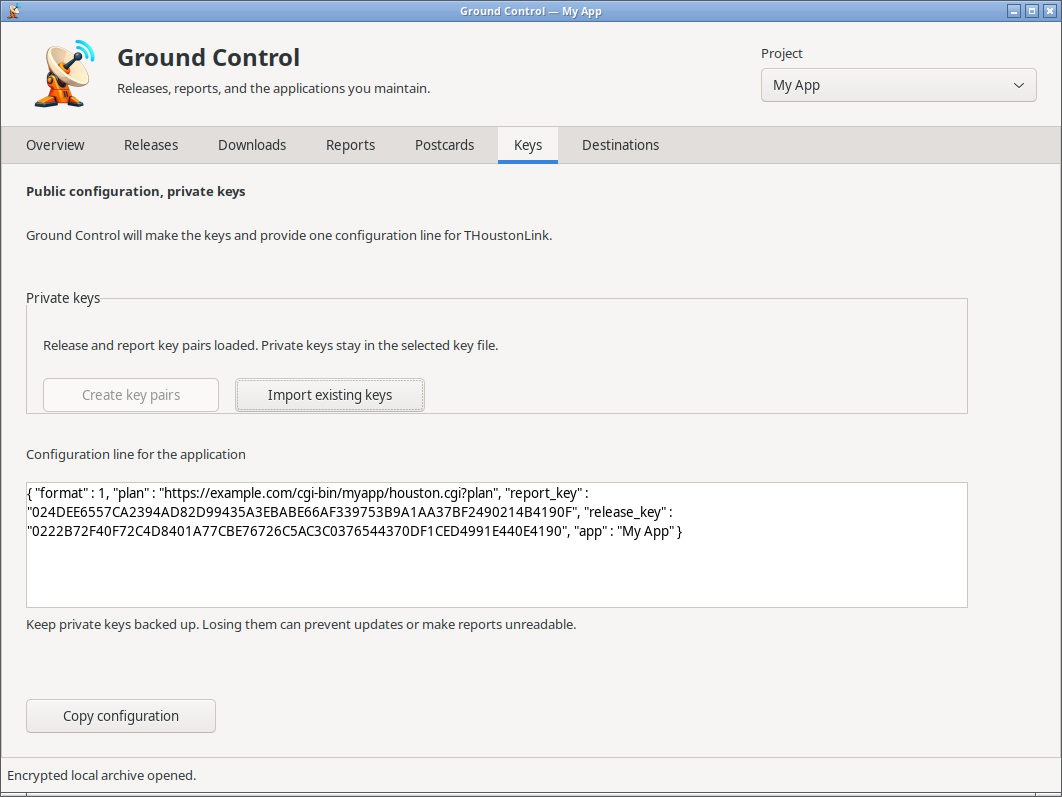
Your side of it: makes the keys, signs and publishes releases, collects reports into a simple tracker with states and notes, counts postcards, and tallies downloads by release, platform and country. With a command line for build scripts.

🛰️

Houston Station

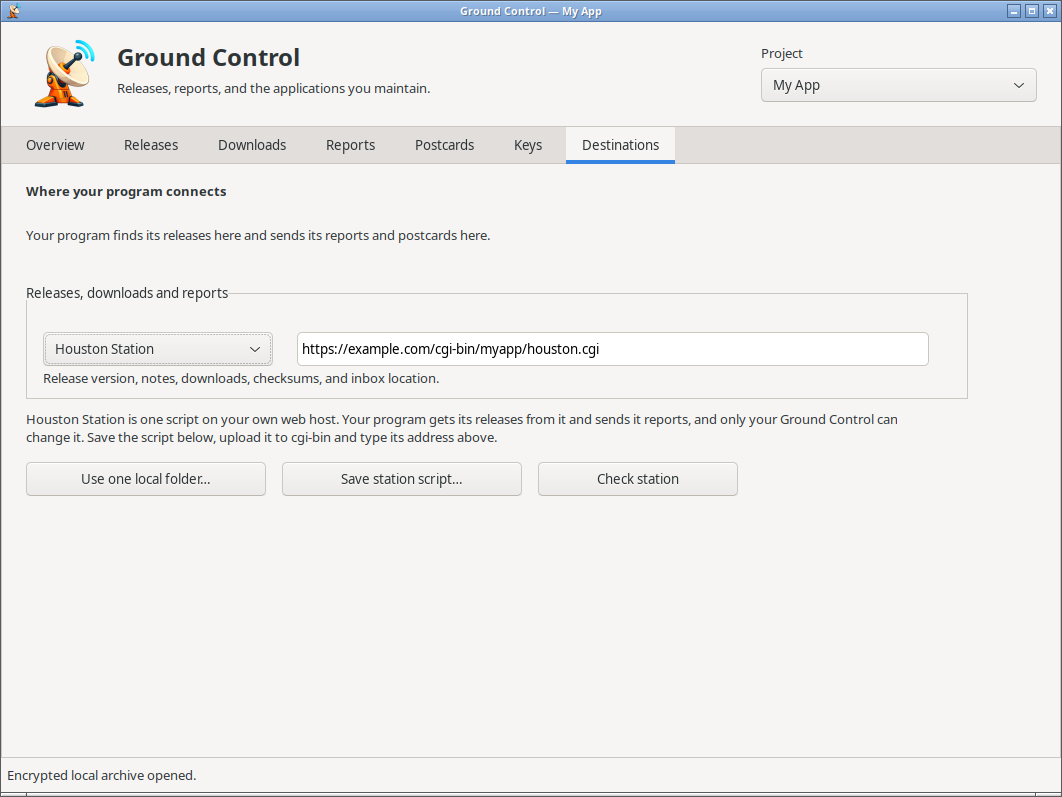
One Perl CGI script in the cgi-bin of almost any web host. It holds your releases and your users' sealed reports, and gives you download links that never change, to put on your site or a forum.

Ground Control, Houston Station and your program

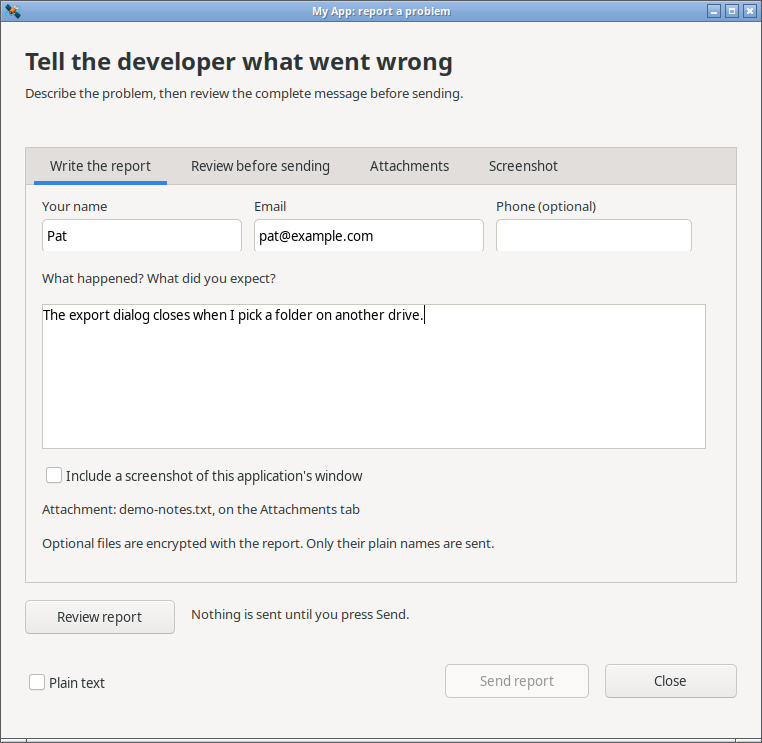
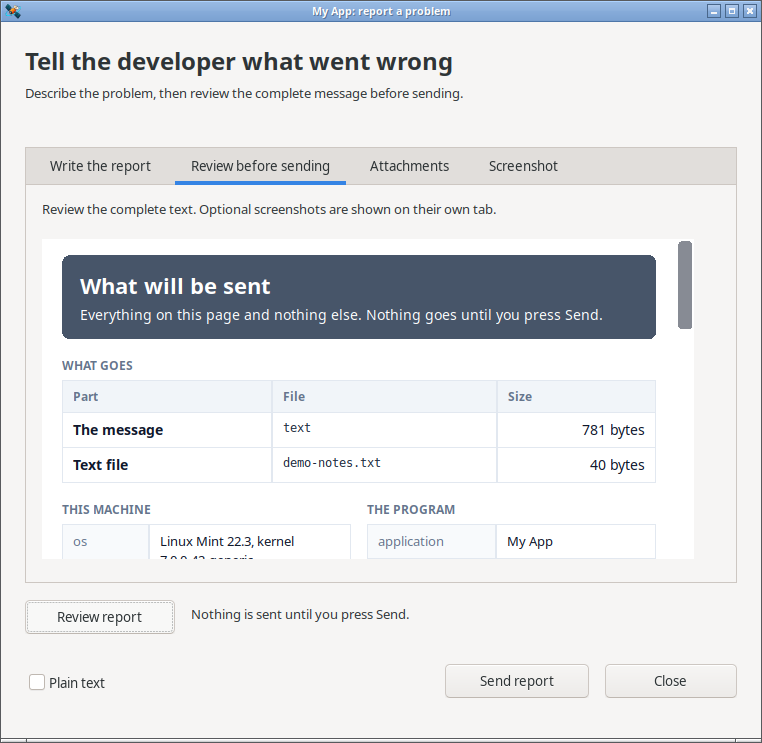
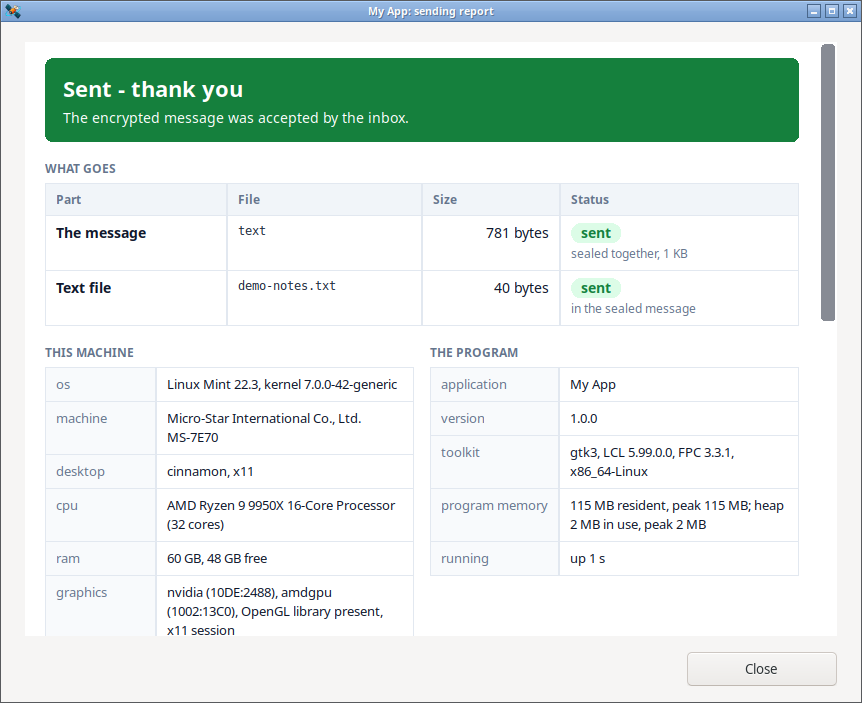
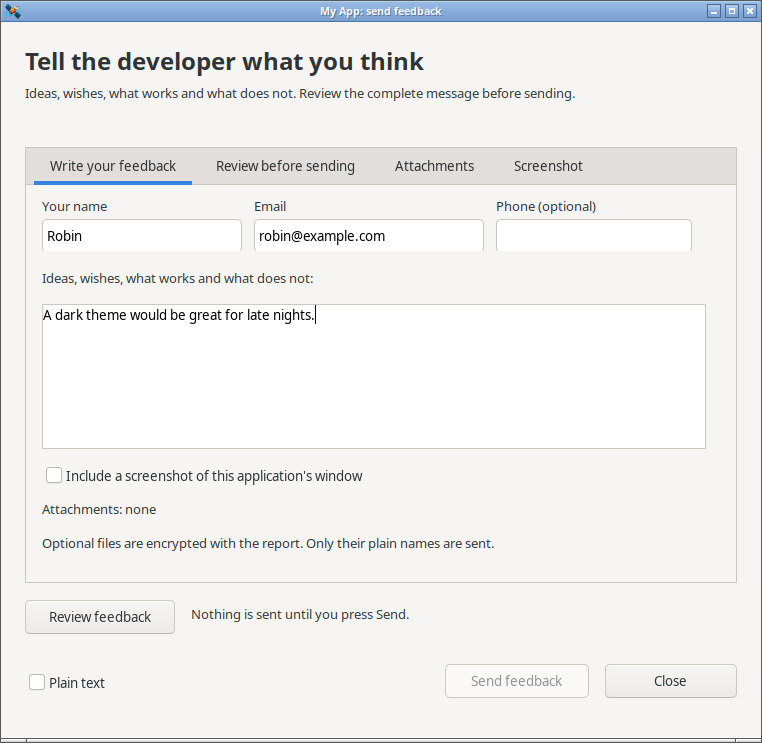
What your users see

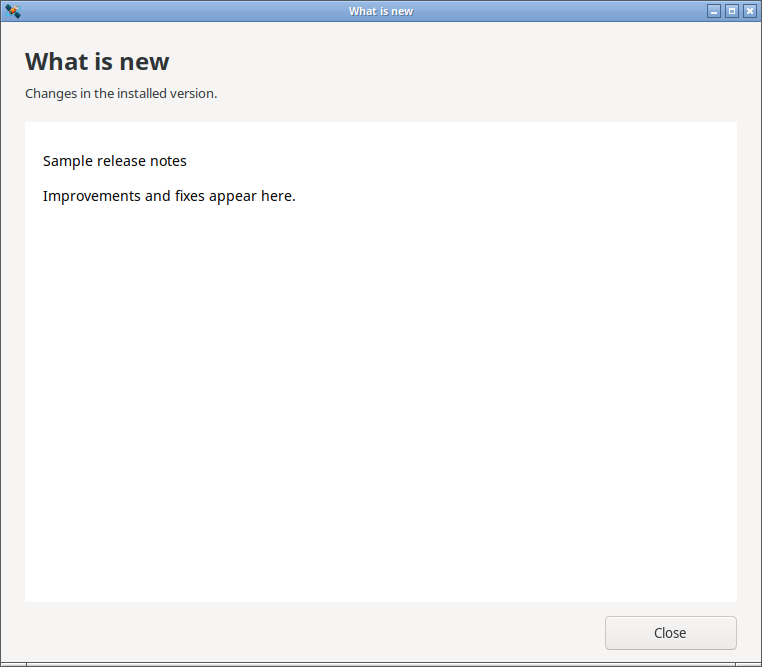
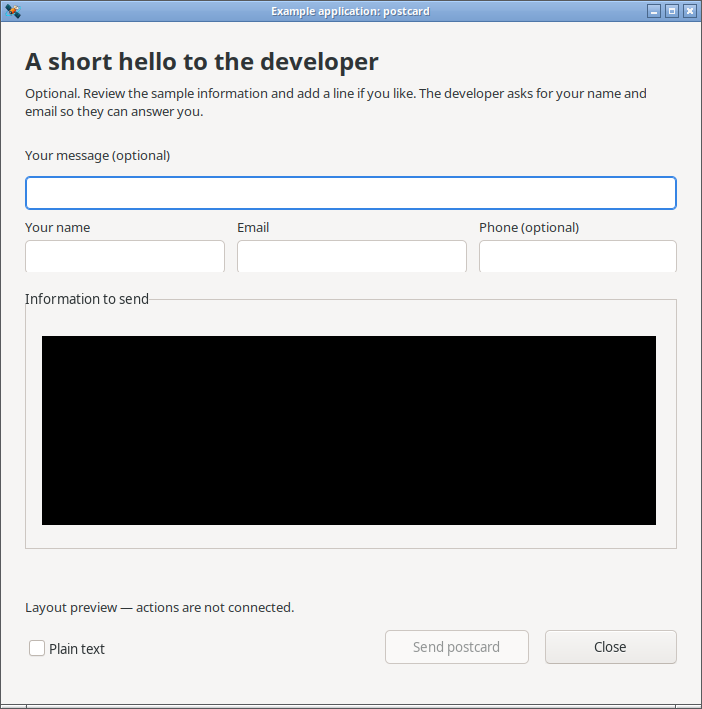
Every window says what it is about to do, and nothing is sent until the user has read it.

What you see

Ground Control keeps each program you publish as a project.

Set up in under an hour

That is the goal Houston is held to: a Lazarus hobbyist goes from nothing to a test bug report in their own tracker in one sitting.

10 min

Install the package

Xor-el's three libraries from the Online Package Manager (CryptoLib4Pascal, HashLib4Pascal and SimpleBaseLib4Pascal), my LazInk for the pages the windows show, then Houston itself. The components appear on a Houston tab.

2 min

Make a project in Ground Control

New project makes the keys and settings in one step. A checklist on the Overview shows what comes next.

5–10 min

Put the station on your host

Save the station script, upload it to its own folder in cgi-bin, make it executable, type its address, press Check station.

5 min

Drop the components on your form

The link and the ones you want. Paste the configuration line into the link and set each button's or menu item's Action. No code.

5 min

Send yourself a report

Run your program, send a report and a postcard, and watch them arrive in Ground Control.

Security, plainly

A small host, plain files, and no trust where none is needed. The cryptography is not homemade: every signature, key and seal comes from Xor-el's CryptoLib4Pascal.

Signed updates

Programs accept a release only with your signature, and a download only with the size and SHA-256 the signed release names. A changed file never replaces your program.

A bad build rolls back

A new build that won't start, or crashes before it settles in, is swapped back for the one before it automatically.

Sealed reports

Reports and postcards are encrypted to your key before they leave the user's computer. The host and anyone on the way see only ciphertext.

Your program decides

An update never closes your program on its own. You say when, and a postponed update can install when the program closes.

Not telemetry

No user or machine identifiers, no usage tracking. The only automatic request is the update check, to your own host. Users read every word of a report before sending it. Your host's log keeps the address of each download, as any web server's does, and Ground Control counts them; countries are looked up only when you ask.

Leaves no mess

Deleting a project can remove its station from the host too: files, log and the script itself, after you confirm it more than once.

Where it stands

Tested by scripts that drive the real programs and windows, on Linux and in Windows and macOS test machines.

LinuxTested end to end: reports, postcards, updates with restart and rollback, tampered downloads refused, installation and removal.
WindowsTested end to end against a real station on a web host.
macOSTested less. Reports, feedback and updates work. Installation isn't offered on macOS yet.
BuildsFPC 3.2.2 and Lazarus 4 or newer. Open source, 0BSD.
In useHecker Sketch runs on it since 28 October 2026: reports, crash reports, postcards and signed updates, through a station on this host. Its own reporting code is gone.
NextA timed setup in another of my programs, to hold it to the under-an-hour goal, then the public source.

How Houston got here

Years ago I started a package for self-updating Lazarus programs and, like most of my stuff, never finished it. Then my drawing program, Hecker Sketch, needed updates and bug reports, and I built them right into the program on top of free file sharing services, Filebin and Catbox. It worked, with a lot of hacked-together code. But anyone can upload to those services too, and that left too many security holes. Someone could be a nuisance and keep your program from ever getting its updates.

So I dug the old package back out and finished it properly, with its own small station: one Perl CGI script. Yes, CGI is old school. I loved writing silly Perl scripts as a kid twenty-some years ago, so part of it is just giving Perl some love. But it is also the simplest thing that works. Almost every web host runs Perl and CGI with no fuss, so you upload one script and forget it.

Houston has replaced all of that hacked-together code in Hecker Sketch. The report a user reads before sending looks the way the old one did, because that look went into Houston as a page any program gets, and Hecker Sketch lost a thousand lines of its own.

How it is built

The ideas, the design and the testing are mine, and AI coding tools do a good share of the typing under my direction, the way I build everything now. They are why a package this size exists at all: it would have taken me months of evenings on my own, and it took weeks. It is tested a lot, on three systems, by scripts that drive the real windows, and the cryptography comes from a real library rather than from me or from a model.

Looks

The components bring their own windows (reports, updates, postcards), plain LCL around a LazInk page, so they work everywhere. The frames may not match a program's own theme. sysrpl recently showed themes for the Lazarus IDE on Windows and Linux, and there may be an LCL theming approach there worth learning from later.

Comments

Would you use it? What would stop you? What would you want it to do that it doesn't? Comments show here once posted.

Loading comments…